
Air conditioning/refrigeration technology & building automation
Process automation solutions from WinMOD
Air conditioning and refrigeration technology
WinMOD has been used by technology leaders in air conditioning and refrigeration technology since 1995. The focus is on machine safety as well as energy savings and system optimisation.
The programming and commissioning of automation systems for air conditioning and refrigeration systems was one of the first business areas of WinMOD GmbH (then Ingenieurbüro Mewes & Partner) in 1991.
High and difficult-to-calculate commissioning times due to thermal masses under inhospitable conditions were one of the triggers for the introduction of simulation methods - the „software test in the office“, virtual commissioning.
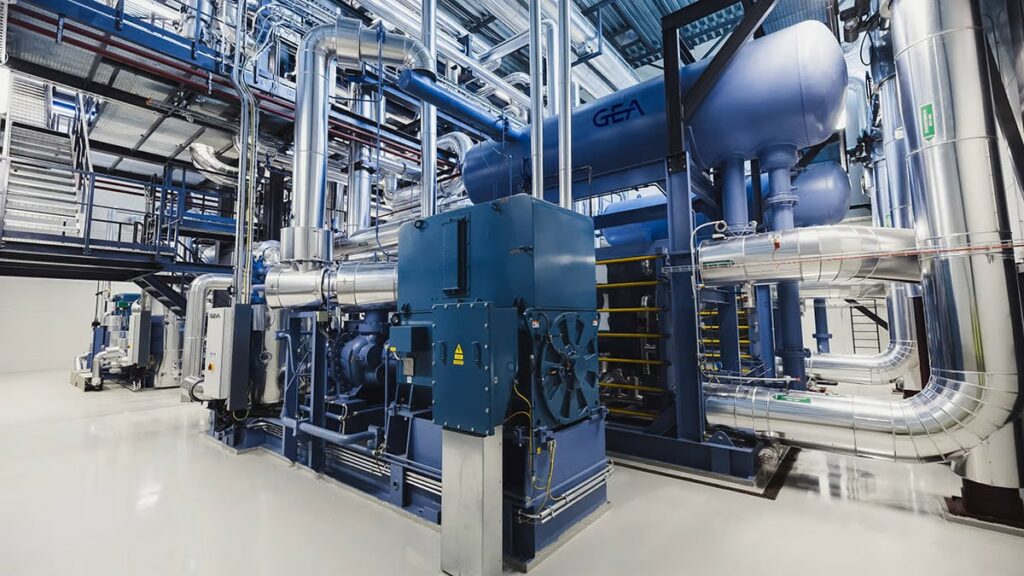
From refrigeration machines such as piston and screw compressors to the simulation of complete refrigeration systems in a wide range of industrial sectors, WinMOD is now used by technology-leading companies. The focus here is on machine safety as well as energy savings and system optimisation.
These compressor technologies are currently gaining in importance through their use as powerful heat pumps for heat generation in the industrial and building sectors, providing an important technological basis for energy-efficient decarbonisation and thus climate neutrality in the industrial heating sector.
Building automation
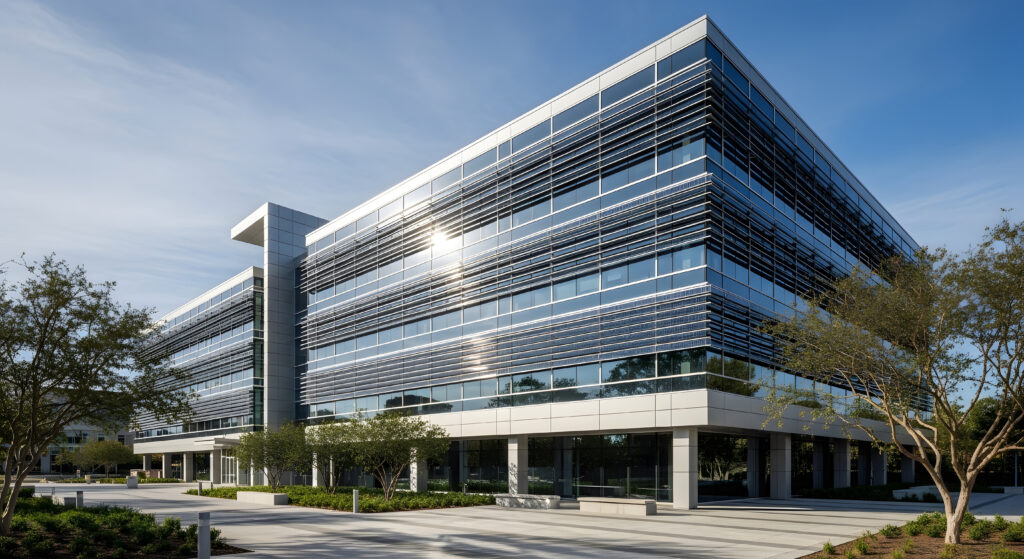
Building automation includes all technical systems, devices and software solutions that are used to automatically control, regulate, monitor and optimise building functions. The aim is to improve energy efficiency, comfort, safety and cost-effectiveness in buildings.
Building automation is an essential part of the commissioning services required for the completion and handover of projects, particularly in new construction projects - both in public building complexes (e.g. office, cultural and administrative buildings) and in industrial facilities for research, production, warehousing and logistics.
In addition to special proprietary building management systems, classic industrial automation components such as PLCs, HMIs and SCADA are increasingly being used. This means that the methods of virtual commissioning (VIBN) are also available in this area and can be used even before the construction and installation work on the technical building equipment has been completed. Due to the positive experiences with WinMOD in various industrial sectors, VIBN is therefore increasingly being used in building automation.
Typical service areas are
- Heating, ventilation and air conditioning technology (HVAC)
- Lighting and shading control
- Energy and load management
- Security and access systems
- Building management system
Further process automation solutions
Typical processes that carry out a continuous or batchwise conversion of substances.
They are divided into main and auxiliary processes.
The aim is the economical and safe production of basic materials or speciality products for all industrial sectors.

Utilisation of similar production processes as in chemistry/pharmacy, but the core here is the use of microorganisms, cell cultures or enzymes to manufacture products.
In future, they will be used in various areas such as pharmaceuticals, green energy and green chemistry.

Processing, preservation and refinement of agricultural and raw materials take centre stage. Typical processes are material and energy-orientated product manufacturing, often combined with strict quality and hygiene standards.

All processes relating to the extraction and processing of raw materials (coal, ores, salts, soils) and their conversion into basic industrial products (steel, cement, gypsum, various other building materials). Mostly very energy-intensive processes.
Refrigeration machines for cold generation and system components for cold distribution and utilisation are a key factor in both industrial plants and building automation.
Energy generation plants based on fossil fuels (coal, gas, oil), nuclear power plants and increasingly promising variants based on environmentally friendly resources such as hydropower, sun, wind, tides, etc. as well as energy distribution systems are increasingly highly automated with extreme demands on their availability.

Water supply from extraction, treatment, storage and distribution, as well as wastewater disposal with transport, storage and treatment for environmentally friendly disposal, are fundamentally important for a modern society and its industry.

Technical installations in road traffic (general traffic control, tunnels, bridges), in rail traffic (signalling and switch systems, signal boxes, ...) and in waterway traffic (locks, weirs, ship lifts)

All areas of technical building equipment such as ventilation, heating, air conditioning, security and fire protection that aim to improve energy efficiency, comfort, safety and cost-effectiveness in buildings.

General shipbuilding for civil, technical and military use, offshore installations as the basis for wind farms, gas and oil production facilities and underwater stations.