
Water and waste water
The extraction and provision of water as well as the collection and treatment of wastewater are among the central tasks of public services - both for cities and municipalities as well as for various industrial sectors.
Water
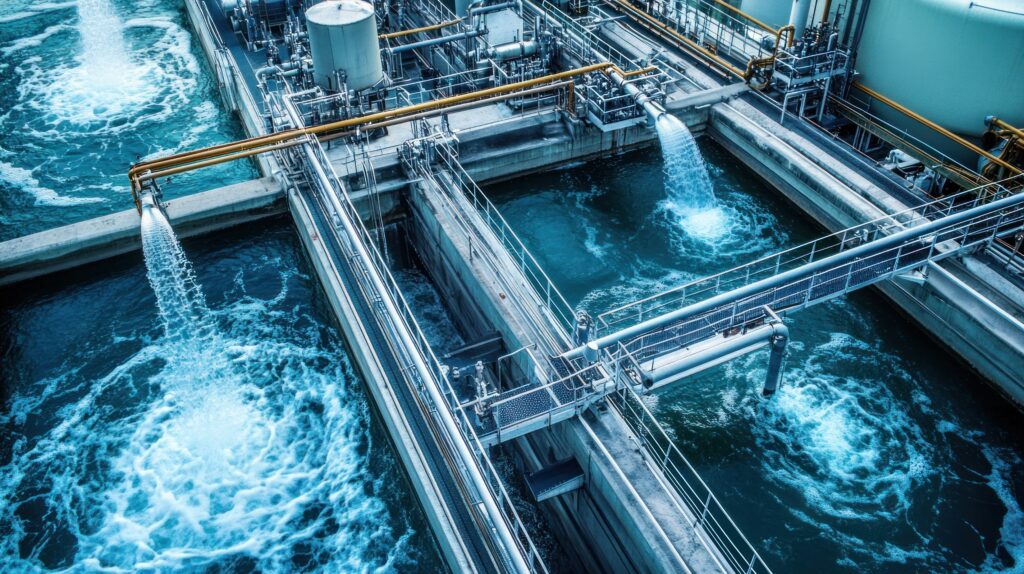
Water is an indispensable resource for the population (food, hygiene) and industry (production, cooling, cleaning) and an important basis for supply in modern societies.
Starting from extraction via wells or surface water, water is generally extracted, treated, tested and distributed in a highly automated and quality-monitored process.
From individual pumping stations, filter systems and purification stages to large water reservoirs and centrally controlled pressure regulation in water networks, everything has to work together.
The software test with WinMOD for each individual station and the interaction of all individual components in network operation, controlled via corresponding process control systems, ensure increasing operational reliability, also in terms of infrastructure security.
Waste water
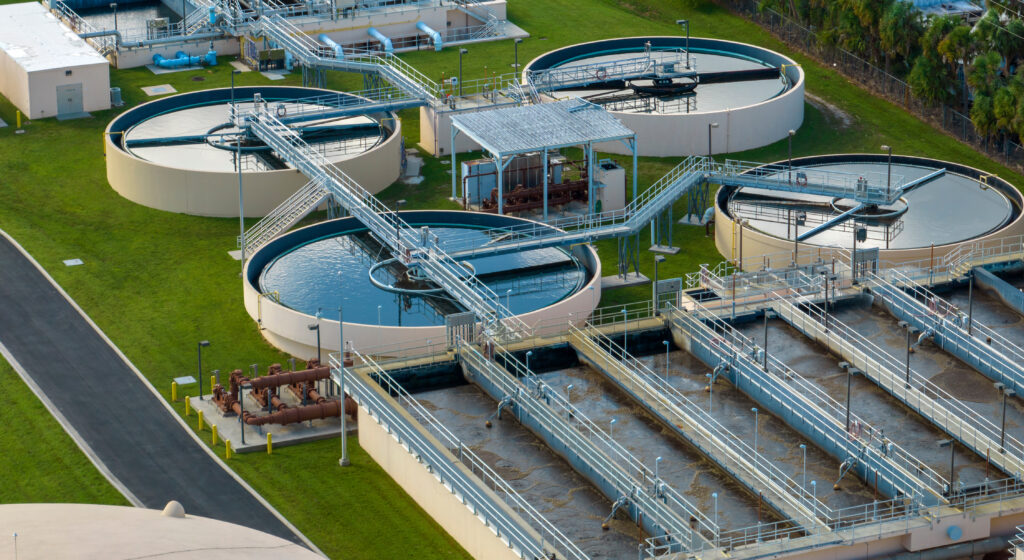
Wastewater supply includes the collection, treatment and return of water to the natural water cycle as well as the sorting and treatment of residual materials, for example in landfills and incineration plants.
The actual commissioning of such systems is often difficult, as they are usually constructed over a large area and have complex, decentralised instrumentation. Since 2002, however, the use of WinMOD has led to considerable savings in costs and commissioning times. As a result, virtual commissioning (VIBN) has become the standard procedure for planning and commissioning for leading plant operators.
WinMOD is currently mainly used in public wastewater supply, i.e. in municipalities, cities and communities. The combination of public planning, approval procedures, tendering and awarding of contracts for technical plant construction and the fact that the automation systems can often only be commissioned at a late stage makes the use of WinMOD an indispensable component of project assurance.
WinMOD is used to carry out individual test steps for decentralised sub-plants, such as pumped storage plants or distribution stations, through to complete wastewater treatment plants. All process stages of water purification are tested - from mechanical purification with screens, grit traps, grease separators and primary clarifiers to biological purification in aeration and secondary clarifiers and chemical purification, for example by adding precipitants. Increasingly, processes for the collection and purification of new types of problematic substances, such as pharmaceutical residues, are also being considered.
As many of these processes can only be tested in reality to a limited extent, virtual commissioning (VIBN) with WinMOD is a crucial tool for preparing, checking and safeguarding the entire system operation.
Further process automation solutions
Typical processes that carry out a continuous or batchwise conversion of substances.
They are divided into main and auxiliary processes.
The aim is the economical and safe production of basic materials or speciality products for all industrial sectors.

Utilisation of similar production processes as in chemistry/pharmacy, but the core here is the use of microorganisms, cell cultures or enzymes to manufacture products.
In future, they will be used in various areas such as pharmaceuticals, green energy and green chemistry.

Processing, preservation and refinement of agricultural and raw materials take centre stage. Typical processes are material and energy-orientated product manufacturing, often combined with strict quality and hygiene standards.

All processes relating to the extraction and processing of raw materials (coal, ores, salts, soils) and their conversion into basic industrial products (steel, cement, gypsum, various other building materials). Mostly very energy-intensive processes.
Refrigeration machines for cold generation and system components for cold distribution and utilisation are a key factor in both industrial plants and building automation.
Energy generation plants based on fossil fuels (coal, gas, oil), nuclear power plants and increasingly promising variants based on environmentally friendly resources such as hydropower, sun, wind, tides, etc. as well as energy distribution systems are increasingly highly automated with extreme demands on their availability.
Water supply from extraction, treatment, storage and distribution, as well as wastewater disposal with transport, storage and treatment for environmentally friendly disposal, are fundamentally important for a modern society and its industry.
Technical installations in road traffic (general traffic control, tunnels, bridges), in rail traffic (signalling and switch systems, signal boxes, ...) and in waterway traffic (locks, weirs, ship lifts)
All areas of technical building equipment such as ventilation, heating, air conditioning, security and fire protection that aim to improve energy efficiency, comfort, safety and cost-effectiveness in buildings.
General shipbuilding for civil, technical and military use, offshore installations as the basis for wind farms, gas and oil production facilities and underwater stations.